
Operational competence is the pillar of manual handling safety – in large-scale factories, warehouses, construction sites, and even the most unassuming stockrooms. To achieve such a feat requires robust training procedures, routine upskilling and creating an environment where staff buy-in and empowerment are second nature.
In this practical guide, I’ll be leaning on three decades of materials handling experience to teach you how to safely and compliantly use a pallet truck whilst nailing each of these essential workplace ingredients. By the end, you’ll be confident in operating these vital pieces of kit, whether you’re after a brief refresher or simply consolidating new knowledge.
There’s no time to lose – let’s hop to it.
Skip to:
- Pallet Truck Refresher
- Anatomy
- Safety Principles
- How to Use a Pallet Truck: 5 Core Operational Steps
- Choosing the Right Model
- Conclusion
- FAQs
A Quick Refresher: How Do Pallet Trucks Work?
Pallet trucks are pretty ubiquitous pieces of kit that you’ll often see in distribution hubs, the backs of heavy goods delivery vans, and at your local garden centre or hardware store – the reason being that they’re relatively straightforward to operate and an affordable solution when budgets are tight. Great news, if you’re a newcomer to the equipment.
But allow me to walk things back a bit. How do pallet trucks actually work?
First off, a pallet truck – also called pallet jacks or pump trucks – is a piece of equipment designed to lift, carry and otherwise manoeuvre pallets, thereby transferring the physical strain from human bodies to its mechanical frame.
Either using a manually operated hydraulic system or an electric equivalent to lift the load, their purpose is to streamline manual handling tasks by providing an ergonomic solution to the physical graft. This protects workers, increases operational efficiency and allows businesses to scale more profitably.
The Anatomy of a Pallet Truck: Controls & Features
Before I put the fundamental manual handling techniques needed for pallet truck operation under the microscope, it’s important to grasp their key controls and features.
Manual Pallet Trucks
- Handle: The point from which operators steer and control the truck, providing an ergonomic grip.
- Control lever: Typically, a 3-position lever located on the handle that you can lift up (to release pressure and lower loads), down (for pumping up loads) and into the neutral position (for transporting the load).
- Hydraulic pump: The engine room of the pallet truck, allowing the forks to be raised and lowered and located at the base of the handle.
- Forks: Two forks that slot neatly into standardised pallet sizes, so they can be lifted.
- Steer wheels: The pair of large wheels below the handlebar that serve to manoeuvre the pallet truck.
- Load wheels: Finally, the other two load-bearing wheels found underneath the forks.
Electric Pallet Trucks
Electric models function similarly; however, they add throttlegrips for variable drive speed control, directional switches, brake controls, and an emergency stop button or power cut-off safety. Instead of the traditional control lever, what you’ll often find is a control panel on an LCD display, allowing for more precise control and a quick glance overview of the apparatus vitals.
Safety First: Keep Principles to Heed Before You Get Started
Absolutely unskippable for operators, managers, safety reps and, indeed, anyone working within the vicinity of these tools is a thorough understanding of legislative compliance.
Beyond the Health and Safety at Work Act 1974, which places the responsibility of protecting the health, safety, and welfare of employees and the public, “so far as is reasonably practicable” on employers, there are more specific laws governing manual handling operations – namely, the Manual Handling Operations Regulations 1992 and The Provision and Use of Work Equipment Regulations 1998 (PUWER).
These statutes mandate workplaces to eliminate hazardous manual tasks wherever possible, conduct detailed, responsive risk assessments, and make operational and/or environmental changes to reduce the risk of injury. This could include supplying materials handling aids, upgrading existing equipment, improving training, modifying site layouts, or even adjusting the way goods are labelled.
If you or your colleagues are unclear on these health and safety fundamentals, I’d recommend continuing your learning with HSE’s resources after you finish this article.
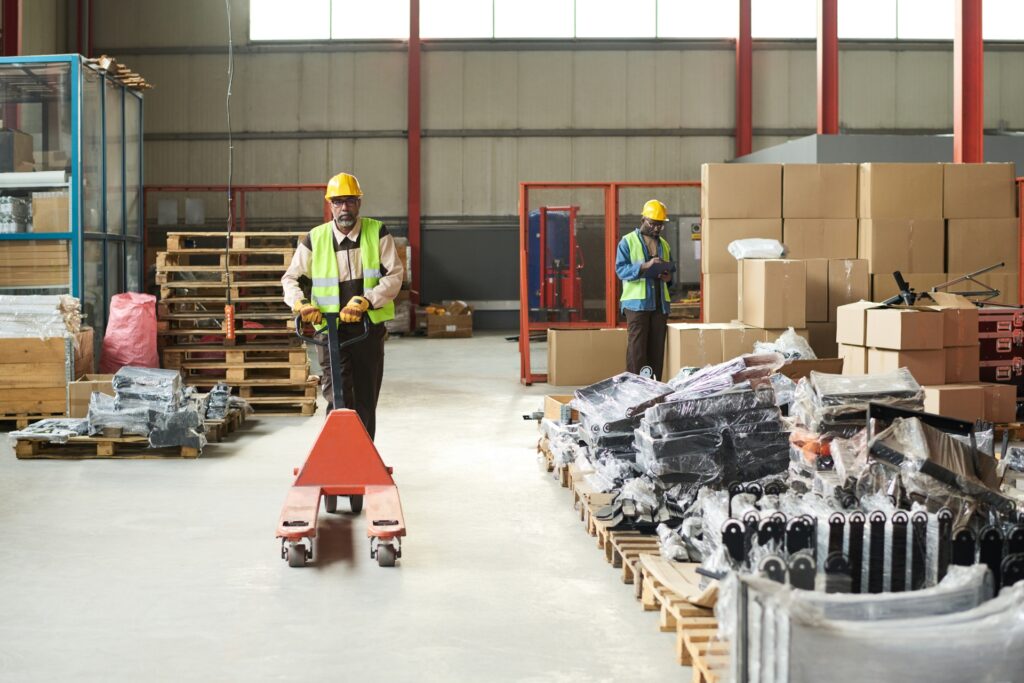
How to Use a Pallet Truck: 5 Steps for Efficient Operation
With those preliminaries out of the way, we can finally get into the meat of this guide: how to operate a pallet jack safely and efficiently.
1. Conducting Preoperational Checks
Before operating any pallet truck, the first thing I emphasise is a quick but thorough safety inspection. It’s a small habit that prevents major problems down the line and is a core principle of learning how to use a pallet truck safely and compliantly.
Visual Checks
Start with a visual check of the key components. Look closely at the forks for bending or cracking, inspect the steer and load wheels for flat spots or excessive wear, and ensure the hydraulic pump raises and lowers the forks smoothly. On electric pallet trucks, check the battery charge level, control panel functions and emergency stop.
Next, confirm that the truck’s safe working load is clearly labelled and appropriate for the task ahead. Overloading is one of the fastest ways to damage equipment and create a tipping hazard. Just as importantly, take a moment to assess the operating environment. Floors should be clear of debris, spillages and uneven surfaces that could destabilise the truck.
Risk Assessment
Finally, I always recommend conducting or reviewing a risk assessment whenever a new type of manual handling activity is introduced, or if the parameters of the task change; for example, heavier loads, different pallet sizes, new storage layouts or altered routes through the warehouse. Risk assessments should identify hazards, evaluate who might be affected, and outline practical control measures before work begins.
These checks may only take a minute, but they’re fundamental to safe pallet truck operation.
2. Setting Up Correctly
Once you’re confident the equipment and environment are safe, the next step in how to use a pallet jack correctly is proper setup and positioning.
Approach the pallet squarely so the forks align evenly with the pallet openings. Entering the pallet at an angle can cause instability or damage to both the load and the truck. Carefully guide the forks all the way underneath until they sit centrally beneath the load for a nice, balanced lift.
From here, pump the handle (or engage the lift control on electric models) until the pallet rises just clear of the ground. There’s no need to lift it excessively; raising the load too high only increases instability.
Equally important is operator posture. Keep your back straight, bend slightly at the knees and maintain a secure but not too tense grip on the handle. Avoid twisting your torso while manoeuvring; instead, reposition your feet and move with the truck. This all serves to reduce the risk of injury.
3. Moving Your Pallet Truck Safety
As a general rule, I recommend pulling the pallet truck rather than pushing it. Pulling allows you to see the path ahead clearly and gives better control over steering. The exception might be when starting movement, moving uphill or manoeuvring in particularly tight spaces.
Keep your speed steady and manageable throughout the task. Sudden turns, sharp braking or excessive momentum can destabilise the load or place unnecessary strain on the equipment. Similarly, always maintain awareness of your surroundings, staying alert for pedestrian traffic, blind corners and narrow aisles and, of course, keeping communication and visibility front and centre.
If the latter is a problem, you might need to revisit your route planning and safe storage practices, especially in the case of stacking pallets above floor level – or enlist the help of a colleague to clear the way.
4. Loading / Unloading
Before lifting, ensure the load itself is secure. Goods should be evenly distributed across the pallet, properly wrapped or strapped if necessary, and free from loose items that could shift about during transportation.
Once positioned, raise the forks just enough to clear the floor and transport the pallet to its destination. When you reach the storage area, gently lower the forks using the release control until the pallet rests firmly on the ground. Take care not to drop loads abruptly, as this can damage both the pallet and the hydraulic system.
This is also the stage where capacity awareness is critical. If the pallet truck struggles to lift the load, feels unstable or becomes difficult to manoeuvre, it may indicate the weight exceeds the truck’s rated capacity. In that case, reassess the load immediately.
5. Ongoing Maintenance
Finally, it’s worth noting that safe operation doesn’t stop when the pallet reaches its destination. Good operators understand that ongoing maintenance and proper storage are essential to keeping equipment reliable over time.
At the end of each shift, lower the forks fully to the ground and park the pallet truck in a designated storage area where it won’t obstruct walkways or vehicle routes. This prevents trip hazards and protects the forks from accidental damage.
Routine maintenance should include cleaning debris from wheels, inspecting for worn components and ensuring the hydraulic system operates smoothly. On a scheduled basis, trained staff should also check hydraulic oil levels, lubricate pivot points, tighten bolts and inspect any braking or electrical systems on powered models.
Common Mistakes to Avoid
Overloading the Equipment
The key culprit of component failure and tip-overs, overloading your pallet trucks is a sure-fire way to shorten the lifespan of your equipment and make day-to-day operation much harder for yourself.
Always heed the designated weight capacity and make sure your staff or colleagues all know the weight limit. For a start, you could ensure that each truck’s limit is clearly labelled for operators and that a proactive culture of health and safety is upheld, with the use of weighing scales highly encouraged.
Using the Pallet Truck on Uneven Surfaces
One of the most common bugbears in warehouse health and safety is the condition of the floors; surface unevenness, cracks, potholes, lumps and bumps aren’t uncommon. Indeed, this poses a real hazard to those navigating the space with a pallet truck.
As such, try to keep the ground in as best condition as you can, not putting off repairs until they pose a more serious risk. In the meantime, signage is a great stopgap, alerting operators to the issue and ensuring they reduce speed to an appropriate level.
Shirking Maintenance Responsibilities
Understanding that equipment maintenance is an ongoing effort is one thing; actually embedding a proactive culture of care and accountability is another. This goes beyond a yearly refresher training or a poster in the staffroom.
In order to ensure equipment checks and maintenance are routinised, there need to be robust systems in place – think: maintenance rotas signed off by managers, recognising safe behaviour, implementing near-miss reporting, and keeping safety at the forefront of daily operations
Using the Device to Lift People or Other Objects
Pallet trucks should never be used outside of their specified use, and that means only palletised loads should be on the end of those forks. Of course, ride-on pallet jacks do indeed exist; however, unless the manufacturer deems it suitable, there should be no piggybacking off these essential devices.
Choosing the Right Model for Your Requirements
Often, the ease of operation comes down to how well your equipment is adapted to the setting. Thus, it’s of the essence that you ask yourself a handful of questions:
Are your active pallet trucks suited to the environment? For instance, are there tight, confined spaces or narrow aisles? Here, compact models or those with a small turning radius are your best bet. On the flipside, are your pallets larger and heavier, necessitating more heavy-duty equipment?
Does the maximum weight capacity meet that of your heaviest loads? Will the truck be used indoors, outdoors, or both? What is the floor surface like? Each of your answers will direct which model, tyres, frame and dimensions are most accommodated to your daily operations.
Essential Features to Consider
- Load-bearing capacity
- Manoeuvrability and size
- Durability and warranty coverage
- Ergonomic features (e.g., adjustable tillers and padded handles)
- Electrical lifting assistance
- Specialised forks for non-standard loads
- Rough-terrain pneumatic tyres
- Built-in weighing scales
What About Electric Pallet Trucks?
If you have the budget and the time to dedicate to training, electric pallet trucks are well worth your consideration. By far the greatest selling point is their ease of use: our customers consistently praise the ergonomic setup and intuitive controls, not to mention the advanced load-bearing capacity, which allows the transportation of heavier loads in fewer trips.
Electric pallet trucks work much like the manual models, and all of the same safety precautions apply. The main difference is that the motorised controls are operated via buttons instead of manual pumping and, of course, their reliance on electric charging points.
To start, the operator needs to turn on the device using the key or panel, after completing the standard pre-operational checks of the wheels, forks and battery levels. Raising a load requires the forks to be carefully positioned under the pallet, and using the lifting button carefully to bring the forks upward. To drive, use the handle throttle to direct speed and direction, manoeuvring carefully as you operate at a controlled speed. Release the throttle to brake, avoid steep gradients, and always park with forks lowered.
For advice on which models to pick, check out our comparison guide of the best electric pallet trucks.
Conclusion: Upskill, Upgrade or Get Left Behind
Although a tidal wave of innovations, driven by AI and robotic ingenuity, is gradually bringing warehouses, factories, construction sites and stockrooms technologically into the present, traditional materials handling equipment remains a fundamental solution – and, indeed, often a more cost-effective, flexible and reliable one.
That said, pallet trucks are only as effective as their users. Staff training, routine maintenance, robust risk assessment, and adequate gear are the drivers of success.
It might sound like a tall order, but, believe me, your strongest competitors are already doing it. After all, safe, efficient operation translates into a healthier workplace where staff are empowered to thrive.
Are you ready to optimise your on-the-ground operations? Explore our full range of materials handling equipment, from traditional hand pallet trucks to specialised electric pallet jacks.
Frequently Asked Questions
What are Some Best Practices for Using Pallet Trucks?
Foundational to all tasks requiring pallet truck operation are ongoing maintenance and inspections before use; this ensures the equipment is in proper working order, the battery life is sufficient for the job and that you don’t stumble upon any issues mid-way through.
Other best practices include maintaining proper posture, moving at a controlled speed, keeping a close eye on your surroundings and wearing appropriate PPE, including grippy shoes. Of course, always follow the manufacturer’s instructions for your specific type of pallet truck.
Is Pushing or Pulling Better?
While you can push a pallet truck, I recommend only doing so when using a manual model and starting motion, moving uphill or working in tight spaces. As a general rule, you’ll rarely need to push.
Pulling, in contrast, is less physically strenuous and enables better manoeuvrability and steering control, all whilst the operator can look ahead for potential hazards. Electric pallet trucks should be moved by the motorised controls.
Do You Have to Be Trained to Use a Pallet Truck?
Yes, all operators should be adequately trained before operating pallet trucks (both manual and electric), as their use falls under the scope of workplace safety legislation, e.g. PUWER, and under HSE best practice guidance such as HSG76 for warehousing and storage.
How Can You Tell if Your Pallet Jack is Overloaded?
If you have trouble lifting the load, the hydraulic pump fails, you experience extreme resistance when trying to move/steer, or the pallet truck generally feels unbalanced, take these as signs that you’ve exceeded the weight capacity. More serious tells are severely bent/creaking forks, worn or flat-spotted wheels, or the unit tipping forward.
What Regular Pallet Truck Maintenance Should I Be Doing?
To stave off component failure and ensure the pallet truck reaches its expected lifespan – i.e., for as long as possible before it loses its efficiency – routine maintenance is a must. Operators should be conducting brief visual inspections before each use and cleaning down the equipment afterwards.
Likewise, a responsible, trained staff member should grease pivot points as per the manufacturer’s recommendation and see to oil levels, nut and bolt checks, brake inspections, software diagnostics and any other monthly maintenance. Of course, more complex issues might require the support of external engineers.