
Manual handling is commonplace in the workplace, yet frequently overlooked by employers, staff and site owners when it falls outside of the stereotypical warehouse setting. Indeed, warehouses, distribution hubs and manufacturing facilities are where most of the materials handling tasks are happening, but they’re also vital processes in shop stockrooms, garden centres, offices and even residential homes.
To safeguard the well-being of you and your staff takes understanding everyone’s responsibilities under the law. In this guide, I’ll be outlining just that, plus 7 tangible steps you can take to make your workplace a safer, more productive and happier place to be.
Skip to:
- TL;DR
- A Reminder: What is Manual Handling?
- Why Manual Handling Can’t Be Overlooked
- How to Handle Manual Handling in the Workplace in 7 Steps
- Conclusion
- FAQs
TL;DR
Manual handling in the workplace is a leading cause of injury, but with the right techniques, risk assessments, and equipment, businesses can significantly improve safety and efficiency. Understanding hazards and implementing best practices helps protect workers while streamlining daily operations.
A Reminder: What is Manual Handling?
Crystalised to its very simplest, manual handling means moving a load using your body. This includes lifting/lowering, pushing/pulling, carrying and otherwise supporting something with your bodily strength.
As such, it carries an inherent risk of physical harm, from repeated strain injuries to slips, trips and falls, some short-term and others contributing to life-long mobility issues.
Although ubiquitous in the industrial and logistics sectors, manual handling pops up in virtually every industry and workplace setting. Here are just a few examples to give you a clearer picture:

Types of Manual Handling Beyond Industrial & Logistical Settings
The following tasks tend to be lower risk, but that doesn’t make them any less dangerous. On the contrary, it’s often because they’re deemed less hazardous that employers fail to provide formal training and adequate equipment, or engage in proper – note, statutory – risk assessment protocols.
This is only compounded by awkward settings, which demand unwieldy postures. For example, tiny rooms or corridors in which twisting while carrying is required to get an item through to where it needs to be.
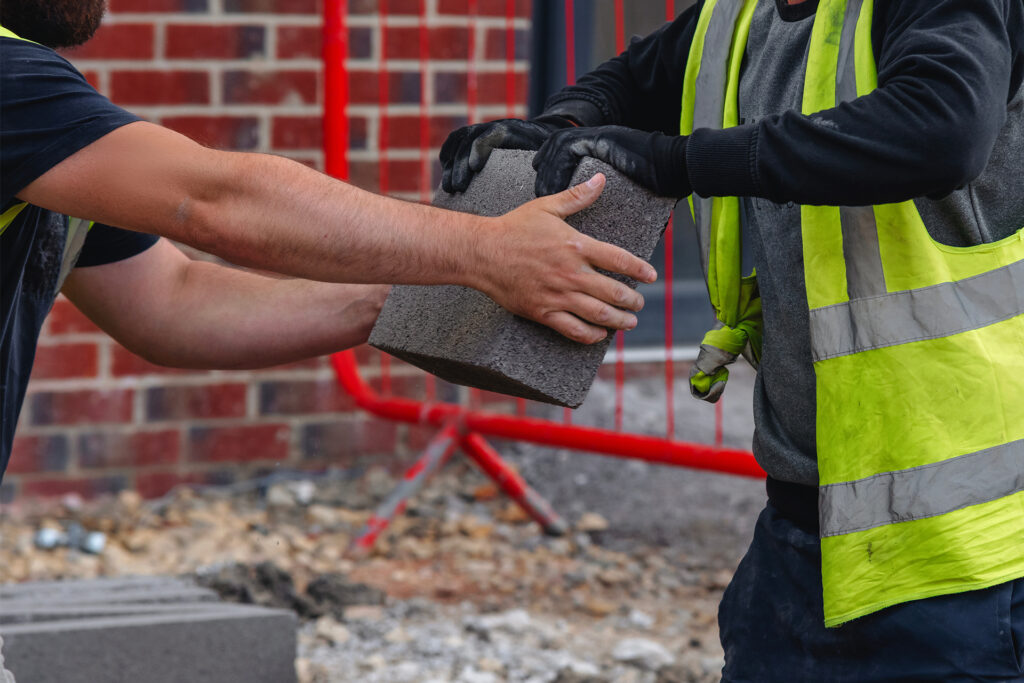
- Construction and trades: Most tradies can attest to the level of manual handling required by the job. Whether it’s building materials, industrial equipment or something else, shifting heavy loads is commonplace.
- Office Environments: Injuries occur even when handling mundane items – think: stacks of printer paper, heavy files, water cooler bottles, or when moving office furniture.
- Retail Settings: Moving stock from storage to the shop floor, restocking shelves, and unloading delivery vehicles often involve high-risk, repetitive, or awkward lifting, especially in confined spaces.
- Healthcare & Social Care: Beyond lifting patients, caregivers face risks when moving heavy medical equipment, stretchers and wheelchairs.
- Cleaning and Maintenance: Repetitive, strenuous tasks like mopping, vacuuming, and pushing heavy industrial cleaning equipment can lead to strains, and must therefore be accounted for.
- Vehicle Loading/Unloading: The process of moving goods to or from a delivery vehicle often happens on uneven surfaces, such as loading bays or car parks, which increases the risk of instability.
Doubtless, there are innumerable additional examples I haven’t touched upon here, but the point remains that manual handling is widespread across British workplaces and deserves attention to detail at every count.
Why Manual Handling Can’t Be Overlooked
Recent data from the Health and Safety Executive shows that manual handling is still responsible for nearly one in six workplace injuries, with hundreds of thousands of workers suffering long-term musculoskeletal conditions each year. In many cases, these injuries occur during routine tasks like lifting stock or moving goods without the right equipment or training.
If that wasn’t reason enough to tighten up your manual handling safety alone, these sorts of cases are taking a huge financial toll on employers, with UK manual handling injuries estimated to cost around £8,500 per incident or an estimated £3.5 billion per year.
Here, the business risks are clear – increased downtime, legal penalties, staff absence, increased employee turnover, and reputational damage – but I want to underscore the human perspective. Whilst, yes, operational efficiency is massively impacted by manual handling accidents, more important is the impact on those immediately affected: victims and their families. No one deserves to feel unsafe at work, and those who knowingly place their bodies on the line are no different.
How to Handle Manual Handling in the Workplace in 7 Steps
Under the Health and Safety at Work Act 1974 along with the Manual Handling Operations Regulations 1992, employers have a legal duty to assess the risks associated with manual handling activities or avoid them as “reasonably practicable”.
Likewise, staff are charged with the responsibility of using the information and resources given to them to reduce their personal risk as well as the risk to those around them.
Here’s how.
Define & Outline Manual Handling Tasks
A first crucial step is to understand what activities in your workplace constitute manual handling. As previously mentioned, this could be any task wherein lifting, lowering, pushing, pulling, or carrying occurs, meaning that risk exposure can vary greatly.
Similarly, a load could be just about anything: stacked pallets, boxes and roll cages to even people and animals. They might be sporadic, or they could form part of an assembly line.
Whatever the case, the important thing is to label each task as such, so managers can review processes, observe workflows, and consult employees and/or health and safety reps accordingly.
Identify the Risks & Weigh Up Avoidance
Once you have all of the manual handling activities correctly identified, you can move on to the most critical stage: identifying the risks and determining whether they can be avoided altogether or, where this isn’t possible, effectively controlled.
In line with UK best practice, the priority should always be to avoid hazardous manual handling where reasonably practicable. This often means redesigning tasks or workflows so that lifting, carrying or moving is no longer required in the first place. For example, materials can be delivered directly to the point of use rather than being transported multiple times across a site. On construction projects, this might involve planning deliveries so materials can be lifted straight into the building rather than carried manually.
Where manual handling cannot be eliminated, the next step is to assess the risks in detail. This includes considering the task itself, the load, the working environment and the individual carrying it out. Factors such as heavy or awkward loads, repetitive movements, poor layouts, or limited space can all significantly increase the likelihood of injury, particularly musculoskeletal disorders.
Once risks are identified, you should then focus on reducing them through practical control measures. One of the most effective approaches is to redesign the task. For example, breaking loads into smaller units, changing the layout to minimise carrying distances, or adjusting working heights to avoid awkward postures. In some cases, the safest option may be to assign more than one person to the task, particularly where loads are bulky, unstable or difficult to grip.
Apply the TILEO Framework
To ensure a thorough and structured assessment, apply the TILEO framework when evaluating each manual handling activity. This approach helps you break down where risks arise and how they can be reduced in a simple yet systematic manner.
The framework can be distilled into a series of guiding questions, which are as follows:
Task
- Does the task involve repetitive movements or long durations?
- Are there awkward postures (twisting, bending, overreaching)?
- Is the load being pushed, pulled, lifted or carried over long distances?
- Can the task be redesigned or mechanised to reduce manual effort?
Individual
- Does the person have the physical capability and experience to perform the task?
- Are there any health conditions, injuries or limitations to consider?
- Have they received appropriate training and instruction?
- Are they wearing suitable clothing and PPE that doesn’t restrict movement?
Load
- Is the load heavy, bulky or difficult to handle?
- Is it unstable, unbalanced or likely to shift during movement?
- Does it have sharp edges, hot surfaces or other hazards like fragile or toxic materials inside?
- Can the load be broken down into smaller, more manageable units?
Environment
- Are there space constraints, uneven floors or trip hazards?
- Is lighting sufficient to clearly see the task and route?
- Are there changes in level, such as steps or ramps?
- Could weather conditions (if outdoors) affect safety?
Other factors
- Is there time pressure encouraging unsafe practices?
- Are there organisational factors, such as poor planning or layout?
- Is suitable equipment available and maintained (e.g. pallet trucks, lift tables)?
- Are team handling or additional resources required?
With all of this essential information gathered, you can identify targeted improvements and better understand the specific risks associated with the manual handling task in question.
Provide Adequate Training
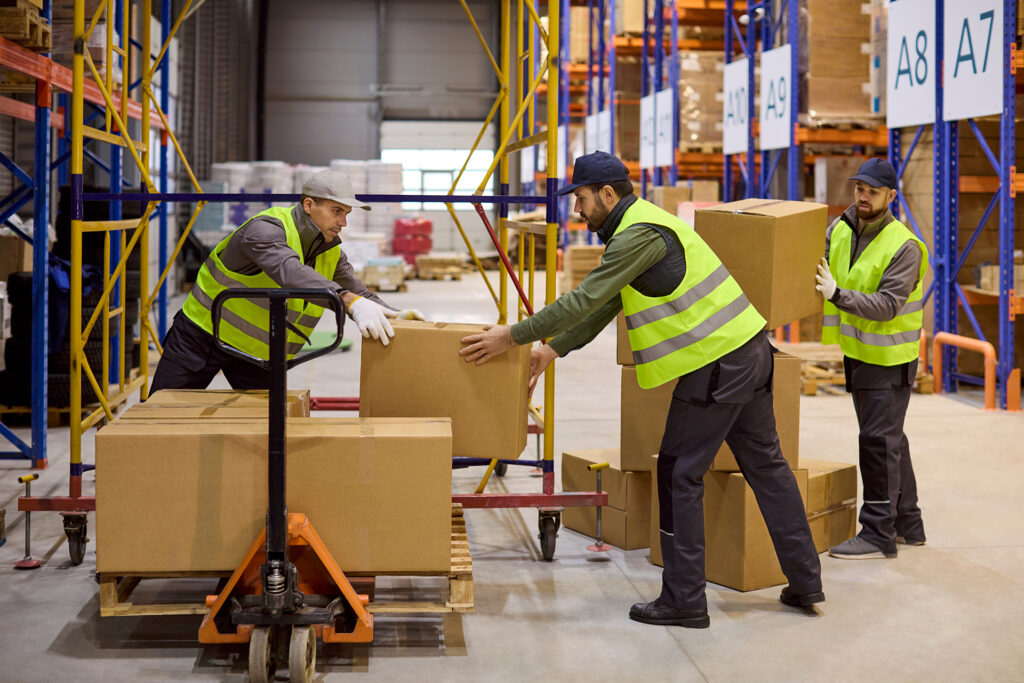
Even the best-designed processes rely on workers understanding how to carry out tasks safely, which is why providing adequate training is essential. Employees should be trained not only in safe lifting techniques but also in how to assess risks for themselves, use equipment correctly – for example, a pallet truck – and recognise when a task should not be carried out manually.
Training also ought to address safe stacking and load stability to prevent shifting or collapse during movement, no matter the type of equipment being used. This will ensure that even after the load has been moved and stored, the next person to interact with it won’t be placed at undue risk.
To help reinforce good habits and ensure that safe practices are consistently applied on site, I recommend investing in regular refresher training, either in-house or via a government-accredited course provider.
Automate Tasks with Appropriate Equipment
One of the most effective ways to reduce manual handling risks is to automate or mechanise tasks using appropriate equipment. Rather than relying on physical effort, introducing simple handling aids can significantly lower the risk of injury while improving efficiency and consistency.
For example, in hospitality settings, dumbwaiters provide a more hygienic and efficient way to transport food and supplies between floors, while also limiting the physical strain placed on staff. Similarly, in retail environments, even compact solutions like mini pallet trucks can make a noticeable difference – ideal in small stockrooms where space is limited.
A wide range of equipment can be used to support or replace manual effort, depending on the task. Pallet trucks are one of the most common solutions for moving heavy loads over short distances, while sack trucks are ideal for transporting individual items such as boxes or appliances. Lift tables help position loads at the correct working height, reducing bending and strain, and stackers allow for safe lifting and placement of pallets at height without the need for manual lifting.
Indeed, there’s no one-size-fits-all solution, but strategic investment will support both operational and long-term business objectives.
Review, Learn, Improve
As with any health and safety venture, the work cannot stop once the paperwork is signed off. In reality, it is an ongoing endeavour; primarily because workplaces and their technologies are in a constant state of evolution, thereby continuously altering the associated risks.
This calls for regular monitoring and check-ins with staff to identify areas of improvement, share learnings and identify new hazards. The safest workplaces are those that recognise that learning is life-long and processes are always ripe for improvement.
Instil a Positive Health & Safety Culture
Not all health and safety measures are tangible, and neither can all risks be 100% managed through procedures and equipment alone.
This takes creating an environment where leaders at all levels build trust with frontline teams, listen to their experiences, and respond in ways that reflect the real physical demands of the job. Because when workers feel part of supportive, psychologically safe teams, they’re more likely to speak up about awkward loads, fatigue, or unsafe practices before they lead to injury.
This openness equally supports continuous learning and improvement, helping organisations refine how manual handling risks are managed over time, whether that’s in a warehouse, hospital, stockroom, building site, café, or something completely different.
Conclusion: Optimising Manual Handling for Safety & Efficiency Means Stronger Bottom Lines
When it comes to manual handling in the workplace, absolutely everybody has a role to play. Managers and site owners’ duty is to create the optimal conditions for safer, more efficient daily operations, whilst on-the-floor staff are responsible for following best practice policy and reporting any issues that crop up. After all, a proactive culture of care always trumps reactivity.
In the end, it means more robust systems and greater productivity, but also a workplace that is both physically and psychologically safer. Together, that makes for a thriving business and stronger bottom lines.
Ready to fine-tune your own manual handling processes? Start reviewing your current procedures/policy, conduct thorough risk assessments, and explore which types of equipment are best placed to improve safety standards within budget constraints.
With the right solution, you’re not simply reducing injury risk, but positioning your company as a responsible employer that places workforce welfare at the heart of things.
Frequently Asked Questions
What Is Manual Handling in the Workplace?
Manual handling in the workplace refers to any activity that involves lifting, lowering, pushing, pulling, or carrying items by hand or bodily force. It applies across many industries and includes everyday tasks like moving stock, equipment, or materials.
Why Is Manual Handling Important for Workplace Safety?
Manual handling is a leading cause of workplace injuries, particularly musculoskeletal issues like back pain and strains. Managing these risks properly helps reduce absences, improve productivity, and ensure compliance with UK health and safety regulations.
What Are the Most Common Manual Handling Risks?
Common risks include lifting heavy or awkward loads, repetitive movements, poor posture, and working in confined or unsafe environments. Without proper controls, these can lead to both short-term injuries and long-term health problems.
Is Manual Handling Only Relevant in Heavy Industries?
Manual handling is not limited to heavy industries like construction or warehousing. It also applies in offices, retail, healthcare, and hospitality, where tasks such as moving equipment, handling deliveries, or assisting people can still pose risks.
What Equipment Can Help Improve Manual Handling Safety?
Equipment such as pallet trucks, sack trucks, lift tables, and conveyors can significantly reduce physical strain and improve efficiency. Choosing the right tools for the task helps minimise risk while supporting smoother day-to-day operations.