
If you work with heavy machinery day in, day out, there’s probably a lot on your mind: keeping equipment downtime as low as feasibly possible, completing daily safety checks, routine maintenance tasks, and above all, ensuring tight compliance with the Lifting Operations and Lifting Equipment Regulations 1998. After all, as a materials handling professional, compliance and its knock-on effects of staff wellbeing and productivity is your #1 goal. But what equipment is LOLER relevant to? And what happens when lifting equipment is found to be non-compliant?
If the answers aren’t bubbling up immediately or you’re feeling a little rusty on the specifics, don’t despair. The purpose of this guide is to get you up to speed and confident, so that you know your responsibilities and rights like the back of your hand.
Contents:
- TLDR
- A Brief Refresher on LOLER
- What Counts as Lifting Equipment?
- What Are Lifting Accessories?
- Examples of LOLER-Enforced Lifting Equipment + Compliance Tips
- Your Legal Duty
- Conclusion: Know Your Responsibilities
- FAQs
TLDR
LOLER applies to workplace equipment used to lift or lower loads or people, including forklifts, cranes, hoists, high-lift pallet trucks, MEWPs and lifting accessories such as slings, chains and hooks. Employers must ensure lifting equipment is suitable, properly maintained and thoroughly examined at the required intervals, with non-compliance potentially resulting in HSE enforcement, prosecution and fines.
A Brief Refresher on the Lifting Operations and Lifting Equipment Regulations 1998
LOLER was passed into UK law at the tail end of the 90s and is considered the gold standard for the safe use of lifting equipment.
Sitting alongside the Provision and Use of Work Equipment Regulations (PUWER) and under its parent act, the Health and Safety at Work Act 1974, it places legal obligations on employers who use machinery, vehicles or manual aids for lifting operations.
The reasons for its introduction are self-explanatory; of all the types of materials handling activities, lifting operations are the most technically challenging and come with elevated risks, not least because they involve working at height.
On the ground, manual handling injuries tend to be less severe, whereas if a crane or a medical hoist lift fails, the consequences are rarely negligible. Heavy loads can crush. Unsecured equipment can topple. Indeed, if we look at RIDDOR’s recorded workplace deaths for the 2025/26 period, the majority of fatal accidents involve a fall from height or being trapped by something collapsing.
What Counts as Lifting Equipment?
To understand which pieces of your workplace kit constitute “lifting equipment”, you first need to get a handle on what exactly is meant by a “lifting operation”.
Fortunately, that’s very simple indeed. Regulation 8(2) of LOLER defines lifting equipment as follows: “an operation concerned with the lifting or lowering of a load”. Here a “load” simply refers to the item being lifted, which could include pallets, machinery, a person or even multiple people.
As such, the list is extensive. So here is just the tip of the iceberg:
- Automated storage and retrieval systems
- Car transporters or vehicle recovery equipment
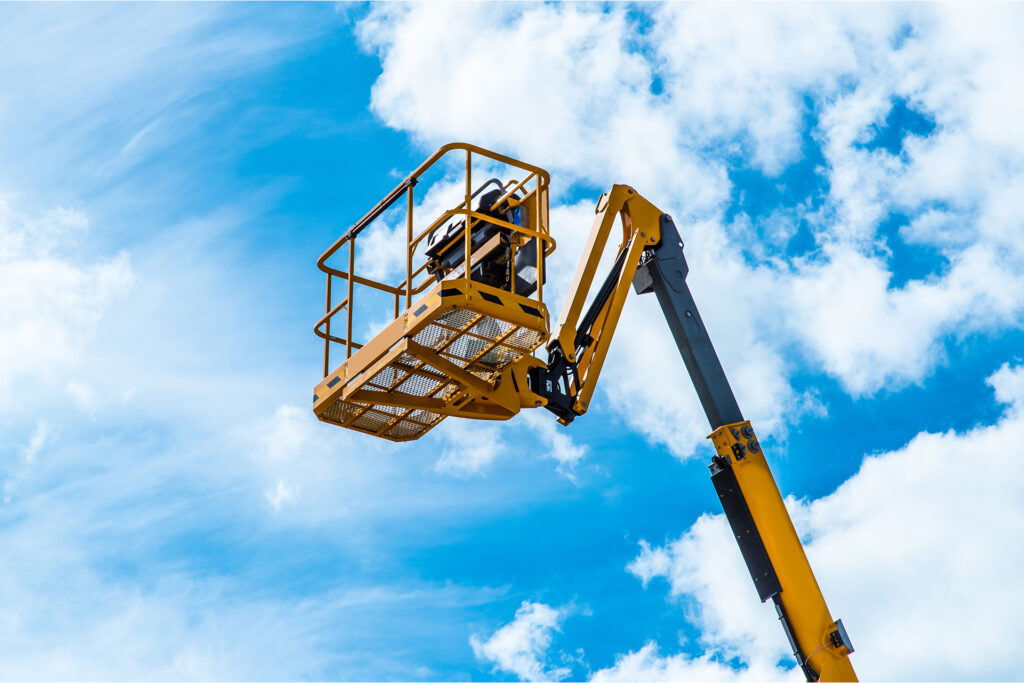
- Cherry pickers
- Cranes, including tower and gantry cranes, or those fitted to vehicles
- Dumb waiters
- Front-end loaders on tractors
- Goods and passenger lifts
- High-lift pallet trucks (both manual and electric models)
- Hoists and slings for medical and social care patients
- Mast climbing work platforms
- Mobile elevating work platforms (MEWPs)
- Order pickers
- Outriggers
- Pull-lifts
- Rope and pulley systems
- Scissor lifts
- Skip collection vehicles
- Slab lifters
- Stackers
- Static lift tables
- Suspended cables
- Telescopic handlers
- Various types of forklift trucks
- Vehicle inspection hoists
- Vehicle tail lifts
And Lifting Accessories?
Again, the answer is fairly straightforward. If the gear attaches a load to your lifting equipment, then it is a lifting accessory. This includes:
- Chains
- Clamp attachments
- Crane forks
- Crane jib attachments
- Grabs
- Harnesses
- Hooks
- Lifting beams
- Magnets
- Removable eyebolts
- Ropes
- Shackles
- Slings
- Spreaders
- Vacuum lifters
Just like your main equipment, these lifting accessories must be regularly inspected at least every 6-12 months depending on the nature of the operations.
This is a given, but it can’t hurt to reiterate that you should only use accessories that are explicitly compatible with the equipment and load in question. The manufacturer’s specs ought to bring you a sense of clarity here.
Practical Examples of LOLER-Enforced Lifting Equipment + Compliance Tips
Under the scope of LOLER, lifting equipment should be inspected at regular intervals to mitigate a slew of negative impacts: accidents, injuries, equipment damage, downtime, disruption and the legal consequences of non-compliance.
Yet many industries fall foul of their responsibilities, and usually because they assume that LOLER only applies to the heaviest of industries, your logistics firms or construction companies. As a result, organisations fail to exert their complete due diligence during risk assessments or equipment checks.
“In many ways, an incomplete inspection is worse than none at all, as it can give rise to a false sense of security, which puts staff at greater risk” says Phil Chesworth, Managing Director at Pallet Truck Shop. “Whether you fix roofs, deliver heavy goods for home renovations or landscaping, lift patients on hospital wards, or repair railway infrastructure, many risks are foreseeable and preventable, and, thus, should always factor into daily operations.”
To help owners and operators of lifting equipment, here are three common examples of lifting tasks and best practices you can use to review your existing operations.
Storing Palletised Goods in a Distribution Hub
Before using any manual handling devices, and when stacking palletised goods at height especially, you must conduct a thorough, case-by-case risk assessment. Consult the equipment documentation and inspection logs, considering what risks may be tied to the task at hand.
Can you see any visible signs of wear? Are operators and equipment owners aware of their maximum capacity and timeframes for maintenance? If electrical equipment, such as an MEWP, is the battery fully charged?
As well as appropriate supervision, you should consider creating an emergency action plan in the case of unexpected equipment failure, supplemented by adequate operator training. As a recent prosecution case of a Derby-based arboriculture company demonstrates, insufficient risk assessment and planning can lead to serious injuries.
When a MEWP stopped working, no one on site could help bring its basket and the tree surgeon in it safely to the ground. Advised to abseil down, the employee fell and sustained lifechanging injuries.
To learn more about stacking pallets, explore our dedicated guide.
Manually Handling Patients in a Care Home
Handling people, as you likely expect, is a different kettle of fish. Of course, the same equipment obligations apply, but there are the added challenges of patient welfare and comfort.
When using medical hoists, slings or other equipment, always prioritise the individual’s medical needs. If they are injured, limiting painful movement, albeit safely, ought to be a top concern. Likewise, select the correct sling for the individual and the task, ensuring it can bear the load – there are no one-size-fits-all jobs.
These best practices, along with a stable centre of gravity, clear transfer plan, consistent communication and regular equipment checks help maintain patient wellbeing and dignity.
Lifting Operations at a Construction Site
Construction is, by nature, a high-risk industry, and on development sites you can expect independent lifting operations all occurring at once. Cranes elevating materials up onto scaffolding, heavy goods vehicles depositing pallets of building materials for tradies’ use, or specialised excavators fitted with lifting features all fit the bill.
All of the above tips apply here, but I’d like to draw your attention to the role of record keeping. Why? Because many construction firms are still dependent on clipboards and paper logs. To enhance your operations and make compliance hassle-free, digital compliance systems are well worth investing in. Eliminating the boring grunt work, they make missing inspections and unverified operator use practically impossible, whilst giving employers real-time visibility across sites.
Your Legal Duty Under LOLER
Here’s the bottom line: if your business or organisation undertakes lifting operations or provides lifting equipment to be used by others, you must, by law, manage and control the associated risks.
Manual handling safety is the duty of everyone involved in the operation: employers, safety reps, site managers and lifting equipment suppliers. However, the liability ultimately lies with the company, whether it is owned by them or not.
The LOLER Framework
Ostensibly, the legislation exists to protect workers, but let’s not forget the crucial role LOLER plays in public assurance. In public settings, like a building development in an urban centre, or where vulnerable people are present – care homes and hospitals immediately spring to mind – hazards pose a greater harm, and the PR consequences of non-compliance or, worse, malpractice make greater ripples.
To mitigate these problems, the Health and Safety Executive (HSE) recommends baking the following framework into your daily operations:
- Ensure that those planning and operating lifting procedures are competent (i.e., capable and properly trained)
- Correctly gauge the suitability (strength and stability) of lifting equipment for the designated task
- Supervise lifting operators appropriately
- Conduct thorough examination of all lifting apparatus
- Before use;
- After installation in a new location;
- Following exceptional circumstances such as overloading or signs of damage;
- And at regular intervals (every 6 months for equipment lifting persons and 12 months for other lifting operations).
- Mark up equipment with safe working load information.
- Keep transparent records of workplace risk assessments and maintenance logs.
After a deeper look? Then the LOLER Approved Code of Practice and guidance is your next stop after reading this guide.
Fines, Prosecution & HSE Enforcement
Although most LOLER infractions don’t stem from a place of malice, negligence is negligence. And given the serious nature of the potential hazards, the law treats these breaches as criminal, rather than civil, matters.
If cases of non-compliance are picked up, the HSE has the power to issue numerous penalties to your business, including an improvement notice, prohibition notice and fines, in addition to prosecuting you, the duty holder, under Section 33 of the Health and Safety at Work Act. Convictions are a permanent stain on your business criminal record and magistrates’ courts have no upper cap on fines.
Conclusion: Know Your Responsibilities
Now you know what equipment is covered by LOLER, you can make 100% certain that every lifting operation is carried out to the letter of the law. Conduct regular lifting equipment inspections, keep on top of health and safety training, stick to best practice techniques and, if in doubt, return to the HSE guidance.
Compliance ultimately starts with culture and the right equipment. So, if you’re looking to upgrade yours, don’t hesitate to get in touch with our knowledgeable team.
Frequently Asked Questions
What Equipment Does LOLER Apply to?
LOLER applies to workplace equipment used for lifting or lowering loads or people. Examples include forklifts, cranes, hoists, MEWPs, high-lift pallet trucks, scissor lifts, stackers, vehicle tail lifts and medical hoists.
Are Lifting Accessories Covered By LOLER?
Yes. Lifting accessories such as slings, chains, hooks, shackles, lifting beams, ropes and removable eyebolts are also covered and must be suitable for the equipment and load.
How Often Should Lifting Equipment Be Examined Under LOLER?
Equipment used to lift people should generally be thoroughly examined every six months, while other lifting equipment should generally be examined every 12 months. Examination may also be required before use, after installation or following exceptional circumstances.
Does LOLER Apply to Forklift Trucks and Pallet Trucks?
LOLER applies to various types of forklift truck and high-lift pallet trucks used for lifting operations, although not regular, floor-level pallet trucks. The equipment must be suitable for its intended task and subject to the appropriate checks and examinations.
Who Is Responsible for LOLER Compliance?
Businesses and organisations undertaking lifting operations or providing lifting equipment for use must manage and control the associated risks. Responsibilities can involve employers, managers, safety representatives, operators and equipment suppliers.
What Happens If You Don’t Comply With LOLER?
Non-compliance can lead to HSE enforcement, including improvement or prohibition notices, prosecution and fines. Poor compliance can also increase the risk of injuries, equipment damage, downtime and disruption.